
Ahmed Saadawi: Frankenstein in Baghdad (2013)

A massive car bomb goes off in front of a hotel in Baghdad, vaporizing the security guard at the front gate. The guard finds himself a soul without a body.
An old lady named Elishva has been waiting for her son to return from the war for years and years already. Nobody else thinks he’ll ever return, but Elishva refuses to give up hope. Some even believe that she, or the image of a saint on her wall, has magical powers.
Simultaneously, an old, alcoholic junk dealer, Hadi, a neighbor to Elishva, has been collecting and joining body parts around the city in order to give them a proper burial. When Hadi finishes the body, he comes to his senses, finding that what he has been doing might not be generally approved of. He decides to quietly get rid of the stitched-up body in his shack – but suddenly the body is gone. Soon, people around the city start dying after being attacked by someone who doesn’t seem to be affected by bullets.
So begins the Frankenstein in Baghdad by Ahmed Saadawi. 📚 The book is set in Baghdad in the first decade of the 2000s when American helicopters fly over constantly and getting questioned by any security organization is a serious risk of physical injury.
A quote on the cover describes the book as “horrifically funny”, but “fun” is not the primary attribute I’d attach to it. The book grimly exposes the ordinary life that those of us in the safer parts of the world can’t easily even imagine. Car bombs of various extremist groups go off so often that they barely make the news unless more than a handful of people die. The city is so accustomed to bombs that their aftermath is taken care of extremely efficiently: body parts are washed away and craters are filled up in mere hours so that normal life can continue.
In addition to the people I already mentioned above, the book follows a few others too. The most prominent of them is Mahmoud the reporter who interviews Hadi and publishes his story. Mahmoud doesn’t quite know whether to believe Hadi and doesn’t expect anyone to take his article seriously, but finds himself interrogated by a mysterious Tracking and Pursuit Department. The department, led by Brigadier Majid, successfully employs astrologers and fortune tellers in order to catch dangerous criminals.
In the end, many threads are left hanging, as if to ask, “what’s the point?”. It was a good enough read, still, and certainly something different. I found this one with the StoryGraph Reads the World challenge, like my previous read Anxious People.
Fredrik Backman: Anxious People

Ten years ago, a man stood on a bridge. A teenage boy happened upon the scene and tried to talk to that man, but failed to stop him from jumping. Anxious People 📚 is not about that man, but it just may be about that bridge. Superficially it’s about a bank robbery gone wrong, ending in a hostage situation, but, as the author says, it’s more about stupid people. And it’s not really about stupid people either: it’s just about people with issues, and some bad decisions, when they’re just trying to be good.
The robbery is covered fast-forward style in the first chapter. After that, the book progresses on two levels: present time, with the police interviewing the witnesses, trying to figure out how it is possible that the robber vanished after letting the hostages go, and in the past, during the hostage situation. Sometimes the author takes a bit of time to just address the reader directly in some commentary of the situation.
The hostages, taken in an open house event, are a colorful lot of people. There is, for example, a retired house flipper couple Anna-Lena and Roger; pregnant female couple Julia & Ro; and bank manager Zara, who looks at middle class people with the same slightly disgusted curiosity that a child might look at a particularly big and slimy bug. Occasionally we also get flashback chapters about Zara visiting her therapist.
When you review books in The StoryGraph, one of the standard questions there is “Are character flaws a main focus?”. I’ve never quite understood what that even means, but after reading Anxious People I can quite confidently say that yes, the flaws of the characters are a main focus in this book. During the police interviews they appear rather infuriating, but little by little you learn more and more about them and come to like them. They are all flawed but just trying their best.
The book is set in an unnamed small town in Sweden, an hour or two away from the capital, Stockholm. Much like in Richard Osman’s Thursday Murder Club, the town police resent their colleagues in the capital. The bosses of their bosses would always want to send them backup from Stockholm for any crime more serious than a speeding ticket, and a hostage situation is definitely one of those, so the local police are under pressure to solve the case by themselves before “help” arrives. “Stockholm”, it turns out, has become something of a curse word among all the townspeople, who feel that Stockholmers believe they’re better than the rest. Still, even Stockholmers have their own “Stockholmers”, possibly in Berlin or in New York.
The author seems to have unloaded a great deal of personal emotions into the book. In the afterwords he mentions someone he couldn’t help and whom he wished could have coped a little longer. At the very end there’s even a list of some actual resources and services that you can turn to if you feel lonely or even worse.
Like HHhH, I found this one for The StoryGraph Reads the World challenge. Here, Chad didn’t even let me down and actually suggested a book written by a Swedish author and set in Sweden too. I also simply enjoyed reading this book.
Laurent Binet: HHhH (2010) 📚
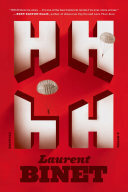
In May 1942, the high-ranking Nazi officer Reinhard Heydrich, nicknamed “The Butcher of Prague”, was attacked in Prague by Czechoslovak resistance agents in an assassination operation called Anthropoid. The author describes how he became obsessed with this event, reading everything that could be even tangentially related to anything or anyone who had even the faintest connection to it — eventually leading him to write this book.
The book, HHhH, is not your typical historical novel, let alone a typical piece of historical fiction. It’s as much a study of the author’s relationship with historical writing as it is a recounting of the events. Binet makes it very clear that he will not invent characters, their thoughts, dialogue, or motives if he does not have any evidence for them. The chapters are short (the shortest one is just one line!) and a chapter that describes the historical events is often followed by the author’s commentary, like musings about missing or contradictory sources, or him comparing his style to some other authors who have written about the same topic. While it may sound confusing, and I admit I was sceptical at first too, the unusual structure actually works very well, and the author manages to keep everything coherent.
Given the subject matter, you could slap a whole bunch of trigger warnings on this book. Most notably, there are some rather detailed and disturbing descriptions of the mass murders, like at the Babyn Yar ravine in Ukraine. There isn’t really a happy ending either: Nazis basically just murdered almost everyone who had ever crossed paths with the resistance operatives, Jozef Gabčík and Jan Kubiš, along with their families, but that’s the problem with history (and Nazis).
I found this book thanks to The StoryGraph Reads the World 2026 challenge. The idea is to read a book by an author from a certain country, such as France, set in that particular country, to expand your literary horizons. I haven’t tried this challenge before, but a while back I had an epiphany that I could just feed my list of read books to an AI and ask it to suggest books I might like, matching the challenge countries.
If you’ve been paying attention, you can see where the AI just hallucinated and outright failed me: HHhH is not set in France. However, I shall call that a lucky accident, as I did enjoy reading this one anyway. The book also won a French literary prize for best debut novel when it came out in 2010, so apparently I’m not the only one.
Teapot review
City builders
I like my city builder games as much as the next guy. I’ve played them since SimCity 2000 and earlier this year wrote about TheoTown already.
Last week I stumbled upon this guy jamessimo on YouTube who’s creating the city builder of his dreams: a game with no grid whatsoever, with parcels of land of arbitrary shapes and sizes. Traditionally these games have been strongly grid-based, even if Cities: Skylines popularized a method where your roads can curve freely, yet the buildings next to them are always placed on a (rotated) grid.
I really like jamessimo’s clear and calm explanations of the systems in his game. He’s an experienced software engineer by trade and has already been working on his game for a couple of years. There’s a part 2 of his series already available as well, detailing his traffic simulation model.
While looking into city builders I discovered there is, of course, a city builder subreddit, r/CityBuilders. There, someone had recently announced a new game called Traffic Architect which I ended up playing on my phone for quite a while. It’s a sub-category of city builders, I guess, where you only focus on making the traffic flow as efficiently as possible. New buildings pop up, new pieces of the map open up, and you unlock new road types. Eventually the game ends once your road network is gridlocked enough. The game reminds me of Mini Metro, or maybe more accurately Mini Motorways. Traffic Architect is also coming to Steam as an improved version, but the browser-based game will stay free, the author says.
Stephen Witt: The Thinking Machine. Jensen Huang, Nvidia, and the World's Most Coveted Microchip (2025) 📚
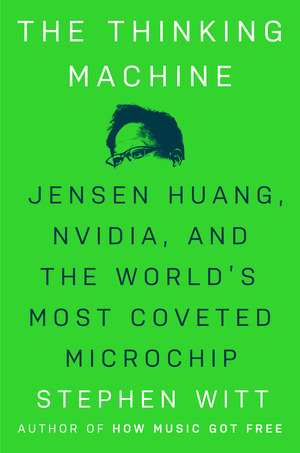
The Thinking Machine by Stephen Witt outlines the rise of Nvidia, currently the most valuable company in the world, from the point of view of Jensen Huang, its CEO and one of the founders.
Jensen, or Jen-Hsun, as his Taiwanese name originally was written, was sent by his parents to the United States in 1973 when he was just ten, along with his brother Jen-Chieh (“Jeff”) who was twelve. He survived bullying in the notorious school he ended up in and later made friends with fellow nerds in the more welcoming high school. There, he also learned table-tennis, eventually playing at the national level.
In university Huang majored in electrical engineering, learning to design microchips. His first job after graduating was at AMD, from where he moved on to LSI Logic after two years. There, he met two brilliant chip designers from a customer, Sun Microsystems: Curtis Priem and Chris Malachowsky. When Sun declined their idea of a dedicated graphics accelerator card for gamers (they made serious hardware for serious people!), the three founded Nvidia.
By this point the book has progressed for just two chapters out of 23. The subsequent chapters detail the development of new generations of Nvidia’s chips, and how they almost went bankrupt too. The book ties the microchips to the games of the time, mostly the various editions of Quake, its designer John Carmack and top player fatal1ty, and how they drove the chip design and marketing.
Chapter six is suddenly about a neural net that played backgammon in 1997, not even mentioning Nvidia or Huang at all. This foreshadows the theme that becomes dominant for the second half of the book and hints at why Nvidia is now so valuable: artificial intelligence. To get there, however, Nvidia still had to develop parallel computing capabilities like never before, and Huang had to bet on R&D projects with no obvious payouts.
The book paints a picture that if, before 2012, you introduced yourself as a parallel computing researcher, you’d be regarded as an academic weirdo. If you introduced yourself as a neural network researcher, you’d be at best ignored and at worst outright ridiculed. If you tried to combine neural networks and parallel computing, people would just refuse to have anything to do with you. This all changed almost overnight when a shy weirdo from the University of Toronto, Alex Krizhevsky, along with Geoffrey Hinton and Ilya Sutskever, trained a neural network in his bedroom with two Nvidia GPUs. This particular neural network completely crushed its competition in the ImageNet 2012 image recognition competition with a wide margin.
From that point on everyone who wanted to train neural networks suddenly wanted lots and lots of Nvidia hardware – either buying it or renting it. There is this brilliant little site called Is AI Profitable Yet? that tracks how much money companies have poured into AI and how much revenue they’ve gotten out of it. Currently, Nvidia is hands down the clear winner, making hundreds of billions, while companies like Google, Amazon, and Microsoft are only losing money.
The book is an interesting look into one part of the history of personal computing, much like the autobiography of Sir Tim Berners-Lee I read earlier. It’s also great at shining some light into how Nvidia got to where it is now.
Jensen Huang himself, however, stays somewhat distant in my opinion. It’s frequently described that he likes to explode at his employees in front of everyone else, making it “educational” and “motivating” people to give their absolute best. Nvidia seems to have attracted the kind of talent that doesn’t mind a bit of abuse from their boss every now and then. Huang is also described as highly intelligent, and to be working all the time, replying to any email sent at any time within minutes. So what drives him? His net worth is beyond anyone’s wildest dreams already. He’s not an idealist trying to save the humanity by colonizing Mars or something, certainly not. It appears to me that he’s just into problem solving, and he likes the kind of problems that can be solved by throwing more compute into them. Or maybe not even that: he just likes to be the one to enable even more computing power. To him it seems all the same what his chips are used for. Is he an empire builder? Or like Walter White in Breaking Bad, is he just in the “money-making business” at this stage? Huang doesn’t have a second in command or any clear successor in the company, so is he just considering Nvidia his legacy, pumping it up to be his own monument? Whatever the case might be, the book is still worth the read!
Re: IndieWeb Carnival roundup: 25 'No way!?' moments
In June, Alex Hsu hosted an IndieWeb Carnival themed “No way!?”. June is now over so Alex diligently wrote a . I have to hand it to Alex and all the other IndieWeb Carnival hosts: reading 25 wildly different blog posts, forming an opinion of them, and writing some kind words of each is no mean feat. 👏
A few posts that I found interesting from the set of entries, in no particular order:
- : Noahie writes about his experiences with hallucinogenic drugs.
- — How caffeine actually works
- : a feel-good (true) story about randomly connecting and reconnecting with someone
- — Daniel reports he has memories from the time he was less than one year old. 🤯
(My own entry to the Carnival was Wait, you lost a nuclear warhead?!)
Re: I’d not buy a LG monitor
The post “” by Beko Pharm drew my attention to this recent video by Gamers Nexus. Beko sums the video up nicely:
It reports about LG’s latest practise to add blatant spyware to a monitor. Or to be precise to the software application associated with that monitor. The icing is that Windows apparently automatically downloads this software by default and this thing starts – without consent – to display ads. It’s ToS also explicitly allows “wiretapping” and “eavesdropping” and it’s the user’s responsibility to obtain consent from anyone in the room.
Indeed, can you imagine that? I went ahead and looked up the LG Terms of Service, and sure enough, there’s this piece:
(…) the voices and utterances of third parties (including family members, guests, children, and bystanders) in the vicinity may be recorded and analyzed to provide the AI-Based Services.
i. CONSENT REQUIREMENT: You acknowledge and agree that it is your sole responsibility to obtain all necessary consents from any third parties whose voices may be captured by the Product and to notify household members and guests that their voices may be captured and processed (…)
The Gamers Nexus video already made fun of this, but indeed, LG expects you to greet your guests with something like “Welcome, welcome! Step in — unless, of course, you object to my TV recording everything you say while you’re at my place.” 🤦
Quoting Beko again:
I’d not buy a LG monitor again. And you shouldn’t too.
Couldn’t say it better myself. But in addition to just boycotting LG devices, consider asking innocent questions from your retailers, especially if they provide online forms for enquiring more info on their products: “Is this one of those models that installs adware on you computer?”.
(In a sense I have to be a bit grateful to LG, though, for making it easier for me to decide my new TV/monitor make when the time eventually comes. I’ve already settled for .)
Re: I Love me Some Em Dashes, and I Don't Care
I read and found it resonating with my own thoughts. The issue with em dashes these days is that AI is unproportionately fond of them, so using them is considered as a sign of AI writing by some. JTR quotes twice:
“But what would people think of my writing if I ever used an em dash? What if someone points one out in my writing?”. Bitch, please. Are you writing for an internet rando who’s got nothing better to do than to hunt for em dashes?
and:
I don’t give a shit what the “oh yeah let’s examine this piece of writing with a magnifying glass for any signs of AI” crowd thinks. I don’t give a shit that AI figured out how to produce em dashes before these online troglodytes did. Typing em dashes is not an AGI-complete problem.
So, yeah, exactly. I’ve been a happy user of em dashes in the past too, but recently I’ve found myself censoring my own posts, i.e. not using em dashes at all and finding ways around them.
I also use AI to polish my posts. I feed my final text to one and ask it to point out any (grammatical) issues. More often than not it tries to push my text into something that does not sound like me, but I simply reject those ideas.
One particular “fix” I regret, and have now reverted, was the time when in book the AI said my text would “flow better” if I removed my em dash!
Let us all proudly use whatever punctuation we like. You know how your text has been created and don’t owe anything to anyone.
PS. While writing this I discovered I’ve actually been using en dashes, –, instead of em dashes, —! In Markdown, the former is created with two dashes (--), while the latter is made with three (---). That’s already too many dashes for me, I’d be happy with one long and one short one…
PPS. No AI was used with this post at all.
Terry Pratchett: The Truth (2000)
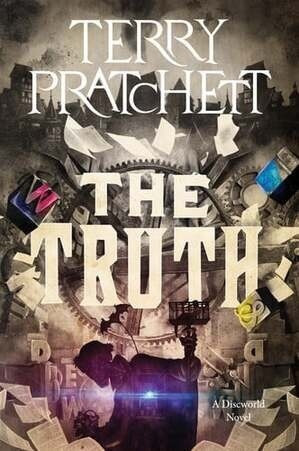
Mr. William de Worde has never cared much for his family’s traditions, which typically include privileged and arrogant behaviour as well as a foolhardy death in some stupid war. No. Instead, Mr. de Worde likes words. As the black sheep of his family, William has settled in Ankh-Morpork, where he edits a regular letter detailing local events for its few wealthy subscribers. The subscribers must be wealthy because engraving the wooden block needed to duplicate the letter is slow and expensive, and because the letter appears relatively infrequently.
Then one day, dwarfs arrive in the city and introduce a device that can duplicate texts endlessly with small movable metal type, even as the text is being dictated, as long as there is enough paper and ink. This crashes the prices of printing work, and suddenly William de Worde finds himself drifting into the role of editor-in-chief of Ankh-Morpork’s first newspaper, the News. The newspaper is sold for pennies instead of dollars, so almost everyone can afford it, and the influx of money cannot be stopped. This naturally angers the Engravers' Guild, which quickly adds Printing to its field and begins predatory pricing to drive the Ankh-Morpork News out of business with an even cheaper paper – whose news is, of course, made up, but does the truth ultimately matter?
De Worde thinks it does, and he begins to investigate why it looks like the city’s Patrician, Lord Vetinari, has murdered his servant. In this context, de Worde gets acquainted with, for example, the New Firm: a gang of two professional killers, where Mr. Pin is small but mean while Mr. Tulip is big but rabid. Additionally, because Ankh-Morpork is a multicultural city, we also run into a zombie lawyer and a vampire photographer who has taken a pledge of temperance and no longer drinks the liquid starting with “b”, but instead channels his passion into his profession.
Even though The Truth was published back in 2000, it feels very timely in this “post-truth era”. Despite its uncomfortable closeness to reality, I still laughed out loud a few times with this Pratchett book too. And although this is indeed already the 25th book in the Discworld series, it is a completely standalone work and does not require reading any other installment.
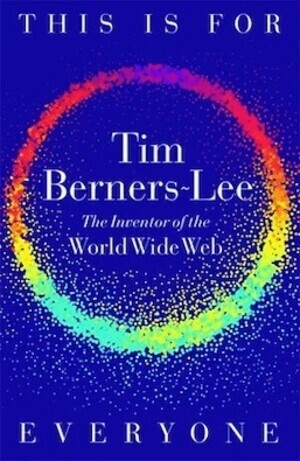
Tim Berners-Lee: This Is For Everyone (2025)
I consider myself quite lucky to have seen the time when computers were still pretty basic and the internet was almost unheard of. The first computer I interacted with had a small monochrome display and two 5.25" floppy drives. The family story goes that I broke its keyboard by hitting it very hard when I was just one year old. A few years later we got a slow modem which made it possible to connect to bulletin board systems (BBS), but the world was still simple with no Web, no search engines, and no attention economy.
That was a roundabout way of saying I really enjoyed This Is for Everyone (2025) by Sir Tim Berners-Lee, as the book is quite a trip down memory lane. Sir Tim is the one who invented the World Wide Web while working at CERN in 1989. He had the idea of using hypertext to link between different servers and came up with HTML, HTTP, URLs, and the first browser and web server. 📚
The book is engaging and well written, chronicling the history of the web from its inception to the present day, including AI and all. Sometimes it was even a bit difficult to read due to all the rabbit holes I fell into while turning the pages and learning something new, wanting to check out more info on the subject immediately, but that’s just a compliment! 😅 The main focus of the book is the Web, of course, but Tim’s personal life is intertwined nicely within to break the more technical flow. And when I say “technical” I just mean the Web side – I found the book very accessible and not, in fact, overly technical in the traditional sense.
The book also shows how Tim didn’t “just” invent the Web, but how he’s also a true humanitarian, remarkably humble, an idealist, and even an adventurer. He persuaded CERN to give the Web away for free but remained deeply involved, and has been so ever since.
Here in Finland it’s a bit of a national meme to celebrate, or at least cry out a silent “yay!”, whenever Finland is mentioned in foreign media in a positive context. Thus, I greatly enjoyed that we had a couple of mentions in this book. First, Tim recalls visiting Helsinki to encourage the Helsinki University of Technology students who had developed the Erwise browser to continue their work, but unfortunately they had no funding for it. Second, he fondly remembers the time he visited Helsinki to receive the Millennium Technology Prize in 2004.
Nowadays Tim is working with the Solid protocol to empower people to take control of their own data and make it interoperable between different systems to enable innovation and trustworthy AI, for example.
I very much recommend this book to anyone, especially if you’re old enough to remember the time before the big social media platforms. But even if you’re not, there’s a good chance you’ll enjoy it if you’re reading this review in the first place, because it suggests you already appreciate the small web.
Re: Re: Most slopcode projects are abandoned and deleted within months of release
Michael Harley recently commented on Thom Holwerda’s post commenting on Evangelos (Evan) “GeopJr” Paterakis’s post:
Evangelos “GeopJr” Paterakis:
⤷ Thom Holwerda:
⤷⤷ Michael Harley:
Michael wrote:
Building is fun and interesting but maintaining? Not so much. My takeaway from this is that we should beware of single developer projects, especially ones a developer coded with LLM coding agents.
I’m certain there are successful single developer projects that are around for the long term, but a single developer who used AI to develop their project seems very likely to abandon it when they get bored and are ready to move on.
So, maybe give a new project a year of releases before you start using it for anything important.
For starters, yes, do give new projects a year before you start using them for anything serious. This goes for basically any new and unproven project, single developer or not, AI-generated or not. For just playing around, use whatever you want.
In general, however, I think this is very much a multifaceted issue:
- Who can release open-source software (OSS)?
- What do we require from someone releasing OSS?
- What can the OSS developer expect from others?
For point one, I think the obvious answer is that anyone can release open-source software. To say otherwise would be gatekeeping.
It gets more interesting at point two: what can we require from someone releasing OSS? Michael seems to suggest that we should expect them to maintain their software, but I would have to disagree. As someone who publishes OSS, you’re not in debt to anyone unless you’ve actually made some binding contract with them. GitHub is full of abandoned projects that only ever received their initial commit, and this was already the case long before the introduction of coding agents.
Point three is probably the most interesting one: what can the OSS developer expect from others? Evan’s original post stemmed from the fact that Flathub banned AI-generated submissions. Flathub is like an app store for Linux, and they have strict standards on the apps included there, as they should. My take here is that no matter how you produce the code, you still need to own it. If you haven’t reviewed the code yourself, you cannot expect anyone else to put in that effort for you either. We’ve been through this conversation with my team at work as well and, after some initial struggles, reached a consensus that this is how it ought to be. If you’re working in a team, AI doesn’t necessarily speed you up that much because you still need to own your code and be able to explain to others why something is done the way it is. “I don’t know, the AI made it” is not a valid excuse at all.
Thom quoted this part from Evan’s original post, saying it’s “absolutely soul-crushing”:
Of the 120 unique repos, 32 were maintained and 88 were abandoned. No seriously, a big portion of them was completely deleted, nowhere to be found, others stopped 6 months ago, right after submitting to Flathub.
Now, I don’t know, is that? Those are just plain numbers that are rather meaningless without a baseline for comparison.
I reached out to Evan, but as he had manually checked all 120 repos and there were some 500 submissions in total during the same time period, it’s understandable that he didn’t check the repos not marked as “AI slop”. We could, for example, find the number of archived Flathub packaging repositories easily (it’s 10 for apps both published and archived in 2025), but that tells us nothing about their actual upstream repositories. In other words, there doesn’t seem to be an easy baseline available.
So, this little piece of research still isn’t very scientific, as Evan indicated in the disclaimer of his original post, and we should bear this in mind:
It’s important to note that this is not 100% accurate. It’s impossible to know for sure if something is still maintained based on the amount of commits per time period, unless it has been declared as such. Software sometimes is “done” and needs no further changes, other times the maintainers are taking a break.
Anyway, I’m now tempted to quote Evan for the last time:
What do we get out of these results? Honestly, not much.
Vibe-coding is all nice and fun and IMO should be encouraged – as long as you don’t expect others to review your code for you. It’d also be nice if you clearly disclosed that your repository was vibe-coded. For a friendly approach to vibe-coded apps, consider something like the Tiny Tool Town that I wrote about earlier.
Re: JulyReply 2026, a blog connecting month
Last month, June 2026, I participated in Robert Birming’s Junited 2026 blog post sharing event. Now it’s July which Robert has branded the JulyReply blog connecting month. The idea is quite simple: if you find a blog post that provokes some thoughts for you, you write a reply to it in your own blog, titled “Re: [the original title]”, just like in the old email conversations.
I think this is yet another good, low-effort event of spreading the Indie Web love. Not all blogs have a reply feature in them, and even if they did, for heated topics it might turn into a bit of a flame war in which one doesn’t want to participate. When you reply in your own blog, you’re in control of the reply. I have also on a couple of occasions replied to a blog author by email, but then it’s just between the two of you, whereas a new blog post might benefit more people.
You’ll find all of my JulyReplies under the JulyReply category. The number of those replies probably won’t be too high, but I’ll at least try!
Ben R. Rich and Leo Janos: Skunk Works (1994)

Ben R. Rich worked in Lockheed’s secret projects division, the Skunk Works, for nearly forty years in total, leading it for about fifteen years. During his career, Rich participated in the development of the top-secret U-2 and SR-71 spy planes, as well as the F-117A stealth fighter, all of which are prominently featured in this book. 📚
The book is also, in its own way, a tribute to Rich’s predecessor, Kelly Johnson, under whom Rich worked for years before being chosen as his successor. Johnson was an aviation genius who could intuitively evaluate the characteristics of aircraft with astonishing accuracy. He was also clearly the Steve Jobs of his time, micromanaging when necessary and giving his subordinates a piece of his mind if work was done lazily.
The book is full of delightful anecdotes and interludes from various parties, such as CIA and Air Force pilots who operated Skunk Works equipment. In the movie Top Gun, Maverick gives a MiG pilot the middle finger from close range, but in the book, an SR-71 pilot tells of cutting across France without permission, leaving a Mirage fighter that had pulled alongside for identification seemingly standing still with a wave of the middle finger and the activation of the afterburners. The book also tells, for example, of an unfortunate bat population living in an airplane hangar that met its doom by crashing into a stealth plane invisible to radar — and to the bats' echolocation.
The book strongly brings to mind Josh Dean’s work The Taking of K-129, which tells how the CIA developed technology during the Cold War to raise a sunken Soviet submarine, as both involve the development of top-secret new high technology in the same era. I can recommend both if you’re looking for real-life techno-thrillers.
The Pitt
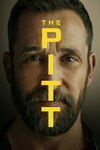
After finishing the excellent HBO Max show Hacks recently I was in dire need of something new to watch. I haven’t watched too many hospital series, but somehow I ended up selecting The Pitt – and pretty much binged it. 🍿
The Pitt is a show about the understaffed Pittsburgh Trauma Medical Center and how the staff navigates the unexpected patients and events. It is a teaching hospital, so the staff includes medical students of various experience, and the older students help supervise the younger ones. There are a lot of characters, each with their own faults; doctors, students, nurses, and patients alike.
Each season focuses on a single 12-hour shift so that each episode corresponds to one hour. The “previously on the Pitt” sections at the start of each episode are genuinely helpful, because there are so many patients so that if one of them has been waiting for their lab results for a couple of hours, it means you might have not seen them in a couple of episodes. So in a sense it’s like 24, but there is no ominous ticking clock at any stage.
The show has not been dumbed down too much for the viewers, so that when a patient with, say, a GSW (gun shot wound) comes in, the doctors and nurses go full jargon for quick and effective communication. For example, the staff regularly performs an “EFAST”, which is never explained. I looked it up though, and it stands for Extended Focused Assessment with Sonography for Trauma, i.e. an ultrasound exam where they look for blood or other anomalies in the chest and abdomen. Here’s also a helpful little table of other common medical terms and their meanings:
| Heart rate | Blood pressure | Blood sugar | |
|---|---|---|---|
| Too high | Tachycardia | Hypertension | Hyperglycemia |
| Too low | Bradycardia | Hypotension | Hypoglycemia |
If in addition to these you know a few basic medicines, you’ll go a long way with the show:
- Ketamine: for sedation and pain relief
- Rocuronium, “roc”: temporarily paralyzes the muscles
- Lidocaine: local anesthetic for numbing something
Especially the “Ketamine & Roc” combo is something they administer almost every time they need to rapidly intubate someone.
So there you go, a first aid kit of surviving The Pitt! I hope you have a good time with Dr. Michael “Robby” Robinavitch and his team.
Star Wars Episode V: The Empire Strikes Back in 100 words
Last year, as I was rewatching the Star Wars movies I decided to write 100 word summaries of them. I managed to complete the following, in this order:
- Star Wars Episode IV: A New Hope in 100 words
- Rogue One: A Star Wars Story in 100 words
- Star Wars Episode I: The Phantom Menace in 100 words
- Star Wars Episode II: Attack of the Clones in 100 words
Let’s jump right into The Empire Strikes Back. I found this one a bit intimidating for there are so many good, memorable scenes, but I’m quite happy with the result, and it didn’t even take too much time after all.
Imperial probe finds rebels on Hoth. Luke is temporarily captured by a wampa. He passes out on the snow field as Kenobi’s ghost tells him to meet Yoda in Dagobah. Han finds Luke, keeps him warm in tauntaun’s intestines. AT-ATs attack, rebels lasso them down and escape. Luke flies to Dagobah. A funny creature turns out to be Yoda. Han & al. are captured by Vader in Bespin, Han is frozen in carbonite. Luke foresees suffering, challenges Vader, loses his hand. Vader reveals he’s Luke’s father. Lando grows a spine, helps others escape. Falcon rescues Luke hanging beneath Cloud City.
Junited 2026
Junited is a no-pressure blog post sharing event that takes place every June. It was invented in 2024 by Robert Birming, and .
While I usually consider my posts ready once published for the first time and only fix typos or such, this particular post I intend to update with new links throughout the month. To keep it light, I won’t be providing much context or commentary, but these will be posts that I have read and enjoyed. Without further ado, let’s get the list started!
Wait, you lost a nuclear warhead?!
When I wrote about the Titanic someone asked me what’s my next cheerful topic going to be – nuclear disasters? That came back to me recently when I found out about the IndieWeb Carnival topic hosted by Alex Hsu.
When it comes to nuclear accidents, everyone knows about Chernobyl and Fukushima, but there have been interesting cases of nuclear warheads getting lost as well. Broken Arrow is not only a 1996 movie starring John Travolta and featuring missing nuclear weapons, but an actual US military codename for nuclear accidents. It’s rather disturbing that such a concept even needs its own codeword, given that nuclear weapons are one of the last things you want to have accidents with. It turns out, however, that people are human and humans make mistakes even when the stakes are high, so here we are.
Some of the most famous of these Broken Arrow cases are:
The 1966 Palomares accident. During the Cold War it was customary for the US bombers to fly around with nuclear weapons, because while in the air those weapons were considered to be safe from a surprise attack by the Soviet Union, and the bombers could also easily be sent for a counterattack in that case. This was called Operation Chrome Dome.
In January 1966 one of these bombers collided mid-air with a tanker while attempting to refuel. The bomber was carrying four thermonuclear bombs. One of the nuclear bombs fell into the sea and the rest to the land near the village of Palomares. The nuclear bombs didn’t go off but the conventional explosives inside two of them did, breaking the weapons apart and distributing radioactive material widely around the area. The US and Spain jointly removed a whopping 1750 tons of radioactive soil and shipped it to the US for disposal. Wikipedia still reports that as of 2025 some contaminated land still remains. All the bombs and their parts were, according to public information, properly recovered though – the one that fell into the sea after almost three months of searching.
Almost exactly two years later, in January 1968, the very similar Thule accident took place. A bomber crashed on ice in Greenland and the conventional explosives inside the weapons spread the radioactive material again, leading to yet another massive cleanup and recovery operation. This time a major part of one of the bombs may even have been left behind, but without the rest of the weapon it poses no realistic danger today. After the Thule accident the US stopped the Chrome Dome flights, because the risks outgrew the perceived benefits.
But it’s not only foreign countries that the US has accidentally almost nuked! In Goldsboro, North Carolina in 1961 the crew lost control of a bomber armed with two nukes when there was a massive fuel leak. The crew had to abandon the aircraft, which then broke apart in the air and released the nukes it was carrying. One bomb buried itself deep in muddy farmland and could never be fully recovered. The other progressed almost all the way through its arming sequence but thankfully had six different fail-safe systems to prevent it from exploding by mistake, because five of them failed and only a single little system prevented the big disaster!
If all of that wasn’t disturbing enough yet, let’s check one more incident: the 1980 Damascus accident. This one didn’t even involve a plane, but something much more mundane: a dropped wrench. Unfortunately this particular wrench was quite heavy, and it was dropped into an intercontinental ballistic missile (ICBM) silo, damaging the fuel tank of the super powerful Titan II ICBM within it. The fuel tank then started leaking, and after about nine hours the silo exploded, catapulting the missile out into a nearby field. Thankfully the safety measures worked perfectly and not even any radioactive contamination took place this time.
So what can we learn about these incidents? Probably not much, except that you should play responsibly around nuclear weapons. So far, good luck has been involved in many of these Broken Arrow incidents, but relying on that is not a viable long-term strategy.
Dan Davies: Lying for Money. How Legendary Frauds Reveal the Workings of Our World (2018)
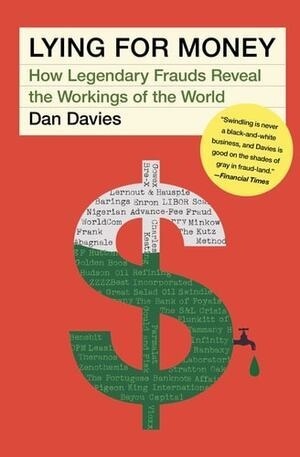
Former stock analyst Dan Davies has categorized and compiled in Lying for Money various frauds that people throughout history have used to try to extract money from others. Some of the scams date back to ancient times, when, for example, seafarers would take out insurance on their ship and then claim it had sunk, simply painting a new name over the old one.
The scams are presented in an order where the first ones are the easiest to understand, progressing toward more complex ones. For example, it is easy to understand that it is unequivocally wrong to take out a loan and intentionally fail to pay it back. More difficult concepts include various control frauds that are not committed against an individual or a company, but against the market. If, for instance, a bank manager gets filthy rich by setting unrealistically high targets for their subordinates to sell loans to consumers, and rank-and-file employees therefore skip checking the customers' creditworthiness, eventually driving them into bankruptcy, have laws been broken, and who should be convicted for it? Especially when the bank reports to the authorities that absolutely everything is checked and done correctly, and if mistakes have been made, they are isolated human errors. At the same time, however, promotions and bonuses go to the most ruthless employees, and there is no active attempt to prevent wrongdoing whatsoever.
The book presents the scams with numerous practical examples, so you even find out, for instance, what the original Charles Ponzi pyramid scheme actually was. The author also sprinkles in just enough dry humor to keep the text reasonably engaging, but still, at least for me, reading the book took a disproportionately long time. Quite interesting anyway, though.
Discovering IndieWeb content
How do you find good, authentic, personal blogs these days? Certainly not with Google! I’ve compiled a list of resources for that.
Random blogs
Feeds of posts
Lists of blogs
Search engines
With these resources you’ll have no shortage of authentic, personal web sites! If I had to pick one favorite from the list it would probably be Bubbles, for it’s great for finding fresh, new posts that pique your interest. Minifeed comes close second, I like their approach of sharing not just the blog metadata but the titles of the latest posts as well.