books
Fredrik Backman: Anxious People

Ten years ago, a man stood on a bridge. A teenage boy happened upon the scene and tried to talk to that man, but failed to stop him from jumping. Anxious People 📚 is not about that man, but it just may be about that bridge. Superficially it’s about a bank robbery gone wrong, ending in a hostage situation, but, as the author says, it’s more about stupid people. And it’s not really about stupid people either: it’s just about people with issues, and some bad decisions, when they’re just trying to be good.
The robbery is covered fast-forward style in the first chapter. After that, the book progresses on two levels: present time, with the police interviewing the witnesses, trying to figure out how it is possible that the robber vanished after letting the hostages go, and in the past, during the hostage situation. Sometimes the author takes a bit of time to just address the reader directly in some commentary of the situation.
The hostages, taken in an open house event, are a colorful lot of people. There is, for example, a retired house flipper couple Anna-Lena and Roger; pregnant female couple Julia & Ro; and bank manager Zara, who looks at middle class people with the same slightly disgusted curiosity that a child might look at a particularly big and slimy bug. Occasionally we also get flashback chapters about Zara visiting her therapist.
When you review books in The StoryGraph, one of the standard questions there is “Are character flaws a main focus?”. I’ve never quite understood what that even means, but after reading Anxious People I can quite confidently say that yes, the flaws of the characters are a main focus in this book. During the police interviews they appear rather infuriating, but little by little you learn more and more about them and come to like them. They are all flawed but just trying their best.
The book is set in an unnamed small town in Sweden, an hour or two away from the capital, Stockholm. Much like in Richard Osman’s Thursday Murder Club, the town police resent their colleagues in the capital. The bosses of their bosses would always want to send them backup from Stockholm for any crime more serious than a speeding ticket, and a hostage situation is definitely one of those, so the local police are under pressure to solve the case by themselves before “help” arrives. “Stockholm”, it turns out, has become something of a curse word among all the townspeople, who feel that Stockholmers believe they’re better than the rest. Still, even Stockholmers have their own “Stockholmers”, possibly in Berlin or in New York.
The author seems to have unloaded a great deal of personal emotions into the book. In the afterwords he mentions someone he couldn’t help and whom he wished could have coped a little longer. At the very end there’s even a list of some actual resources and services that you can turn to if you feel lonely or even worse.
Like HHhH, I found this one for The StoryGraph Reads the World challenge. Here, Chad didn’t even let me down and actually suggested a book written by a Swedish author and set in Sweden too. I also simply enjoyed reading this book.
Laurent Binet: HHhH (2010) 📚
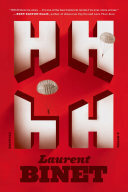
In May 1942, the high-ranking Nazi officer Reinhard Heydrich, nicknamed “The Butcher of Prague”, was attacked in Prague by Czechoslovak resistance agents in an assassination operation called Anthropoid. The author describes how he became obsessed with this event, reading everything that could be even tangentially related to anything or anyone who had even the faintest connection to it — eventually leading him to write this book.
The book, HHhH, is not your typical historical novel, let alone a typical piece of historical fiction. It’s as much a study of the author’s relationship with historical writing as it is a recounting of the events. Binet makes it very clear that he will not invent characters, their thoughts, dialogue, or motives if he does not have any evidence for them. The chapters are short (the shortest one is just one line!) and a chapter that describes the historical events is often followed by the author’s commentary, like musings about missing or contradictory sources, or him comparing his style to some other authors who have written about the same topic. While it may sound confusing, and I admit I was sceptical at first too, the unusual structure actually works very well, and the author manages to keep everything coherent.
Given the subject matter, you could slap a whole bunch of trigger warnings on this book. Most notably, there are some rather detailed and disturbing descriptions of the mass murders, like at the Babyn Yar ravine in Ukraine. There isn’t really a happy ending either: Nazis basically just murdered almost everyone who had ever crossed paths with the resistance operatives, Jozef Gabčík and Jan Kubiš, along with their families, but that’s the problem with history (and Nazis).
I found this book thanks to The StoryGraph Reads the World 2026 challenge. The idea is to read a book by an author from a certain country, such as France, set in that particular country, to expand your literary horizons. I haven’t tried this challenge before, but a while back I had an epiphany that I could just feed my list of read books to an AI and ask it to suggest books I might like, matching the challenge countries.
If you’ve been paying attention, you can see where the AI just hallucinated and outright failed me: HHhH is not set in France. However, I shall call that a lucky accident, as I did enjoy reading this one anyway. The book also won a French literary prize for best debut novel when it came out in 2010, so apparently I’m not the only one.
Stephen Witt: The Thinking Machine. Jensen Huang, Nvidia, and the World's Most Coveted Microchip (2025) 📚
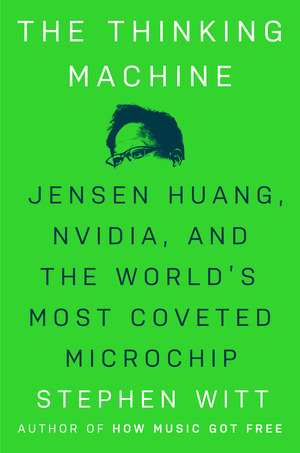
The Thinking Machine by Stephen Witt outlines the rise of Nvidia, currently the most valuable company in the world, from the point of view of Jensen Huang, its CEO and one of the founders.
Jensen, or Jen-Hsun, as his Taiwanese name originally was written, was sent by his parents to the United States in 1973 when he was just ten, along with his brother Jen-Chieh (“Jeff”) who was twelve. He survived bullying in the notorious school he ended up in and later made friends with fellow nerds in the more welcoming high school. There, he also learned table-tennis, eventually playing at the national level.
In university Huang majored in electrical engineering, learning to design microchips. His first job after graduating was at AMD, from where he moved on to LSI Logic after two years. There, he met two brilliant chip designers from a customer, Sun Microsystems: Curtis Priem and Chris Malachowsky. When Sun declined their idea of a dedicated graphics accelerator card for gamers (they made serious hardware for serious people!), the three founded Nvidia.
By this point the book has progressed for just two chapters out of 23. The subsequent chapters detail the development of new generations of Nvidia’s chips, and how they almost went bankrupt too. The book ties the microchips to the games of the time, mostly the various editions of Quake, its designer John Carmack and top player fatal1ty, and how they drove the chip design and marketing.
Chapter six is suddenly about a neural net that played backgammon in 1997, not even mentioning Nvidia or Huang at all. This foreshadows the theme that becomes dominant for the second half of the book and hints at why Nvidia is now so valuable: artificial intelligence. To get there, however, Nvidia still had to develop parallel computing capabilities like never before, and Huang had to bet on R&D projects with no obvious payouts.
The book paints a picture that if, before 2012, you introduced yourself as a parallel computing researcher, you’d be regarded as an academic weirdo. If you introduced yourself as a neural network researcher, you’d be at best ignored and at worst outright ridiculed. If you tried to combine neural networks and parallel computing, people would just refuse to have anything to do with you. This all changed almost overnight when a shy weirdo from the University of Toronto, Alex Krizhevsky, along with Geoffrey Hinton and Ilya Sutskever, trained a neural network in his bedroom with two Nvidia GPUs. This particular neural network completely crushed its competition in the ImageNet 2012 image recognition competition with a wide margin.
From that point on everyone who wanted to train neural networks suddenly wanted lots and lots of Nvidia hardware – either buying it or renting it. There is this brilliant little site called Is AI Profitable Yet? that tracks how much money companies have poured into AI and how much revenue they’ve gotten out of it. Currently, Nvidia is hands down the clear winner, making hundreds of billions, while companies like Google, Amazon, and Microsoft are only losing money.
The book is an interesting look into one part of the history of personal computing, much like the autobiography of Sir Tim Berners-Lee I read earlier. It’s also great at shining some light into how Nvidia got to where it is now.
Jensen Huang himself, however, stays somewhat distant in my opinion. It’s frequently described that he likes to explode at his employees in front of everyone else, making it “educational” and “motivating” people to give their absolute best. Nvidia seems to have attracted the kind of talent that doesn’t mind a bit of abuse from their boss every now and then. Huang is also described as highly intelligent, and to be working all the time, replying to any email sent at any time within minutes. So what drives him? His net worth is beyond anyone’s wildest dreams already. He’s not an idealist trying to save the humanity by colonizing Mars or something, certainly not. It appears to me that he’s just into problem solving, and he likes the kind of problems that can be solved by throwing more compute into them. Or maybe not even that: he just likes to be the one to enable even more computing power. To him it seems all the same what his chips are used for. Is he an empire builder? Or like Walter White in Breaking Bad, is he just in the “money-making business” at this stage? Huang doesn’t have a second in command or any clear successor in the company, so is he just considering Nvidia his legacy, pumping it up to be his own monument? Whatever the case might be, the book is still worth the read!
Terry Pratchett: The Truth (2000)
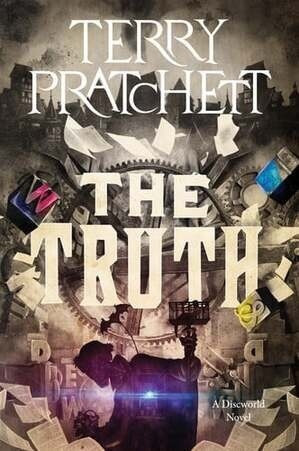
Mr. William de Worde has never cared much for his family’s traditions, which typically include privileged and arrogant behaviour as well as a foolhardy death in some stupid war. No. Instead, Mr. de Worde likes words. As the black sheep of his family, William has settled in Ankh-Morpork, where he edits a regular letter detailing local events for its few wealthy subscribers. The subscribers must be wealthy because engraving the wooden block needed to duplicate the letter is slow and expensive, and because the letter appears relatively infrequently.
Then one day, dwarfs arrive in the city and introduce a device that can duplicate texts endlessly with small movable metal type, even as the text is being dictated, as long as there is enough paper and ink. This crashes the prices of printing work, and suddenly William de Worde finds himself drifting into the role of editor-in-chief of Ankh-Morpork’s first newspaper, the News. The newspaper is sold for pennies instead of dollars, so almost everyone can afford it, and the influx of money cannot be stopped. This naturally angers the Engravers' Guild, which quickly adds Printing to its field and begins predatory pricing to drive the Ankh-Morpork News out of business with an even cheaper paper – whose news is, of course, made up, but does the truth ultimately matter?
De Worde thinks it does, and he begins to investigate why it looks like the city’s Patrician, Lord Vetinari, has murdered his servant. In this context, de Worde gets acquainted with, for example, the New Firm: a gang of two professional killers, where Mr. Pin is small but mean while Mr. Tulip is big but rabid. Additionally, because Ankh-Morpork is a multicultural city, we also run into a zombie lawyer and a vampire photographer who has taken a pledge of temperance and no longer drinks the liquid starting with “b”, but instead channels his passion into his profession.
Even though The Truth was published back in 2000, it feels very timely in this “post-truth era”. Despite its uncomfortable closeness to reality, I still laughed out loud a few times with this Pratchett book too. And although this is indeed already the 25th book in the Discworld series, it is a completely standalone work and does not require reading any other installment.
Tim Berners-Lee: This Is For Everyone (2025)
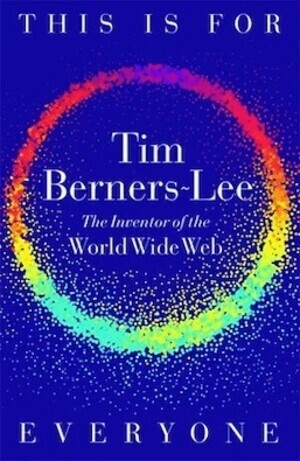
I consider myself quite lucky to have seen the time when computers were still pretty basic and the internet was almost unheard of. The first computer I interacted with had a small monochrome display and two 5.25" floppy drives. The family story goes that I broke its keyboard by hitting it very hard when I was just one year old. A few years later we got a slow modem which made it possible to connect to bulletin board systems (BBS), but the world was still simple with no Web, no search engines, and no attention economy.
That was a roundabout way of saying I really enjoyed This Is for Everyone (2025) by Sir Tim Berners-Lee, as the book is quite a trip down memory lane. Sir Tim is the one who invented the World Wide Web while working at CERN in 1989. He had the idea of using hypertext to link between different servers and came up with HTML, HTTP, URLs, and the first browser and web server. 📚
The book is engaging and well written, chronicling the history of the web from its inception to the present day, including AI and all. Sometimes it was even a bit difficult to read due to all the rabbit holes I fell into while turning the pages and learning something new, wanting to check out more info on the subject immediately, but that’s just a compliment! 😅 The main focus of the book is the Web, of course, but Tim’s personal life is intertwined nicely within to break the more technical flow. And when I say “technical” I just mean the Web side – I found the book very accessible and not, in fact, overly technical in the traditional sense.
The book also shows how Tim didn’t “just” invent the Web, but how he’s also a true humanitarian, remarkably humble, an idealist, and even an adventurer. He persuaded CERN to give the Web away for free but remained deeply involved, and has been so ever since.
Here in Finland it’s a bit of a national meme to celebrate, or at least cry out a silent “yay!”, whenever Finland is mentioned in foreign media in a positive context. Thus, I greatly enjoyed that we had a couple of mentions in this book. First, Tim recalls visiting Helsinki to encourage the Helsinki University of Technology students who had developed the Erwise browser to continue their work, but unfortunately they had no funding for it. Second, he fondly remembers the time he visited Helsinki to receive the Millennium Technology Prize in 2004.
Nowadays Tim is working with the Solid protocol to empower people to take control of their own data and make it interoperable between different systems to enable innovation and trustworthy AI, for example.
I very much recommend this book to anyone, especially if you’re old enough to remember the time before the big social media platforms. But even if you’re not, there’s a good chance you’ll enjoy it if you’re reading this review in the first place, because it suggests you already appreciate the small web.
Ben R. Rich and Leo Janos: Skunk Works (1994)

Ben R. Rich worked in Lockheed’s secret projects division, the Skunk Works, for nearly forty years in total, leading it for about fifteen years. During his career, Rich participated in the development of the top-secret U-2 and SR-71 spy planes, as well as the F-117A stealth fighter, all of which are prominently featured in this book. 📚
The book is also, in its own way, a tribute to Rich’s predecessor, Kelly Johnson, under whom Rich worked for years before being chosen as his successor. Johnson was an aviation genius who could intuitively evaluate the characteristics of aircraft with astonishing accuracy. He was also clearly the Steve Jobs of his time, micromanaging when necessary and giving his subordinates a piece of his mind if work was done lazily.
The book is full of delightful anecdotes and interludes from various parties, such as CIA and Air Force pilots who operated Skunk Works equipment. In the movie Top Gun, Maverick gives a MiG pilot the middle finger from close range, but in the book, an SR-71 pilot tells of cutting across France without permission, leaving a Mirage fighter that had pulled alongside for identification seemingly standing still with a wave of the middle finger and the activation of the afterburners. The book also tells, for example, of an unfortunate bat population living in an airplane hangar that met its doom by crashing into a stealth plane invisible to radar — and to the bats' echolocation.
The book strongly brings to mind Josh Dean’s work The Taking of K-129, which tells how the CIA developed technology during the Cold War to raise a sunken Soviet submarine, as both involve the development of top-secret new high technology in the same era. I can recommend both if you’re looking for real-life techno-thrillers.
Dan Davies: Lying for Money. How Legendary Frauds Reveal the Workings of Our World (2018)
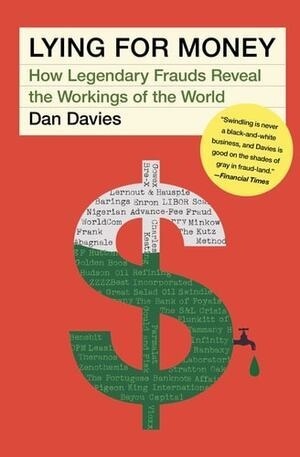
Former stock analyst Dan Davies has categorized and compiled in Lying for Money various frauds that people throughout history have used to try to extract money from others. Some of the scams date back to ancient times, when, for example, seafarers would take out insurance on their ship and then claim it had sunk, simply painting a new name over the old one.
The scams are presented in an order where the first ones are the easiest to understand, progressing toward more complex ones. For example, it is easy to understand that it is unequivocally wrong to take out a loan and intentionally fail to pay it back. More difficult concepts include various control frauds that are not committed against an individual or a company, but against the market. If, for instance, a bank manager gets filthy rich by setting unrealistically high targets for their subordinates to sell loans to consumers, and rank-and-file employees therefore skip checking the customers' creditworthiness, eventually driving them into bankruptcy, have laws been broken, and who should be convicted for it? Especially when the bank reports to the authorities that absolutely everything is checked and done correctly, and if mistakes have been made, they are isolated human errors. At the same time, however, promotions and bonuses go to the most ruthless employees, and there is no active attempt to prevent wrongdoing whatsoever.
The book presents the scams with numerous practical examples, so you even find out, for instance, what the original Charles Ponzi pyramid scheme actually was. The author also sprinkles in just enough dry humor to keep the text reasonably engaging, but still, at least for me, reading the book took a disproportionately long time. Quite interesting anyway, though.
Dirk Gently's Holistic Detective Agency
I recently stumbled upon the IndieWeb Book Club, where for April: Dirk Gently’s Holistic Detective Agency (1987) by Douglas Adams. 📚 I recall reading it probably some 25 years ago and figured it’s high time to read it again. I thought I remembered something about the book, but in reality I didn’t remember anything else besides a sofa stuck in a staircase.
In Dirk Gently’s Holistic Detective Agency Richard MacDuff, a programmer working for the millionaire computer genius George Way, becomes a person of interest when Way is murdered, so he seeks help from a peculiar private detective who goes by the name Dirk Gently. Gently follows the holistic approach that says that everything is connected. Sherlock Holmes remarked that when you eliminate the impossible, whatever remains must be the truth, but Dirk refuses to be limited by what people generally consider “impossible”. That will turn out to be a handy trait indeed when the case starts to involve ghosts and time travel…
The book starts a bit slow with an Electric Monk on horseback and a dinner at a university, and it isn’t even until the end of the fourth chapter that the titular Dirk Gently is mentioned for the first time. The ending also leaves you rather flabbergasted about what actually happened when time, space, and spacetime don’t quite behave themselves. Suffice it to say it would also help a bit if you knew The Rime of the Ancient Mariner poem by Samuel Coleridge, which apparently everyone in the UK knows. Between the start and the ending the book is still enjoyable enough, with Adams showing his fascination for computers and technology as well as his detest for the British telephone systems. Maybe I should read the second Dirk Gently book again as well, The Long Dark Tea-Time of the Soul.
Kari Hautamäki: Tänne minäkin kuolen (2026)

Tänne minäkin kuolen (“I’ll Die Here Too”) is the sequel to paramedic Hautamäki’s previous works Et sinä (vielä) kuole ("(Not) A Time to Die") (2021) and Nyt sinä kuolet (“Now You’re Going to Die”) (2023), this time published by WSOY. 📚 In the foreword, the author mentions receiving feedback that his last book was too dark, but that he intends to write through humor again in this work. Compared to that expectation, I didn’t find the book particularly “funny”, but it was certainly entertaining. The humor is usually drawn from culture clashes and the reactions of paramedics, and it’s often pitch-black.
Marianne Bellotti: Kill It with Fire. Manage Aging Computer Systems (and Future Proof Modern Ones) (2021)

I admit I rarely read professional literature, but I found this one after watching Greg Wilson’s recent YouTube lecture Cocaine and Conway’s Law. Conway’s Law states that the structure of software reflects the organizational structure of the company developing it. If there’s one big team working on it, the result is a monolithic software, but if multiple teams are involved, the software is likely composed of interconnected services.
Marianne Bellotti’s book Kill It with Fire – Manage Aging Computer Systems (and Future Proof Modern Ones) deals with a topic that, in my experience, is very common but hasn’t been written about much: the modernization of old systems. The topic is usually only touched on at conferences, where someone might give a presentation on how old technology X was heroically replaced with new technology Y, and now service response times and costs have decreased. However, this approach overlooks all the pain the organization experiences in terms of definitions, requirements, assembling teams, etc.
One of Bellotti’s messages is that an old system cannot be used as a specification for a new one. Its design documents, if they ever existed, are likely lost, and the modernizers cannot, for example, know whether something was implemented a certain way due to the technical constraints of its time or if there was another good reason for it. Nor does it make sense to carry out the modernization all at once; it should be done in small pieces, as in agile development in general.
Ultimately, the focus is on people: what motivates them, for example. Managers and subordinates often have conflicting incentives for their actions, and Bellotti offers advice on how to identify and align them.
All in all, a good book for anyone who has been in the software business long enough to have experienced at least one legacy system. 📚
Tom Wainwright - Narconomics: How to Run a Drug Cartel (2016)

If Narconomics were a school textbook, the course description might be something like this:
The course provides students with comprehensive skills to understand the operations of a drug organization at all levels. After the course, the student will understand the stages of drug production, smuggling, and distribution. The student will be able to compare labor costs and production risks in different countries. After the course, the student will also have the skills to understand when it’s worth trying to bribe authorities and when to threaten them, or when to relocate operations elsewhere. The student will understand the basic functions of a drug organization’s sales, marketing, and HR departments and will be able to apply them, for example, by tattooing visible logos on all gang members to reduce employee turnover. There are no prerequisites for the course. See also: Levitt & Dubner: Freakonomics.
📚
Book review: Raeste & Sokala: The World's 50 Most Dangerous Companies

Juha-Pekka Raeste & Hannu Sokala: Maailman 50 vaarallisinta yhtiötä (“The World’s 50 Most Dangerous Companies”) (2020, 2022)
Reporters Sokala and Raeste have written (in Finnish) what is essentially a “Who’s Who” of corporate giants. As the name suggests, the book lists the world’s most dangerous companies, though the final result is necessarily the authors' subjective view. Additionally, for example, Visa and Mastercard are such similar companies that, just for the sake of variety, only one was chosen to be included.
In any case, predictably included are, for example, firms in the petrochemical industry and private military contractors, but also a significant number of various financial institutions. In the Top 5, we find Google, Tencent, Amazon, and Facebook, whose danger is based, of course, on how they seek not only to know all possible data about their users but also to stifle competition through, for example, predatory pricing or simply buying competitors out of the market. These billion-dollar companies can also afford to break all possible laws; for instance, Google easily pays off even large multi-million fines with just a few hours of its operating profit. With a practically endless cash reserve, it’s also nice to lobby for favorable laws while simultaneously pursuing world domination through artificial intelligence.
The text flows smoothly and doesn’t dwell on any one company for too long. However, the subject matter of the work is inherently so heavy that I didn’t feel like reading more than a couple of chapters a day. Still, this is quite an educational and recommended reading experience! 📚📔📖
Andy Weir: Project Hail Mary (2021)
A man wakes up from a coma in a strange cylindrical room, with only a computer and robotic arms taking care of him. The reader knows he is on a spaceship, but the man himself has such a severe amnesia that he doesn’t even remember his own name. However, the man discovers he is quite competent in the natural sciences and gradually begins to recall flashes of his past too.
The story progresses on two timelines: the present on the spaceship and sometime earlier on Earth. The reader thus learns about the protagonist’s past at the same pace as the man himself. Gradually, it becomes clear that nothing less than the future of all humanity is at stake.
Weir is known for his first book, The Martian. In the movie based on that one everything goes wrong for Matt Damon and he ends up as a potato farmer on Mars. Hail Mary is Weir’s third novel, and Murphy’s Law is still strongly present. As a reader I found myself almost frustrated at some point, wondering if this thing couldn’t have gone reasonably well either.
In any case, the book was captivating, and the world that Weir had developed was detailed and interesting. The category is so-called hard SF, meaning science fiction that strives for scientific accuracy, or at least attempts to explain events scientifically, and for the lay reader, it certainly passes for the real deal. I recommend this one. 📚
PS. I just learned that there’s a Project Hail Mary movie coming in March 2026, starring Ryan Gosling! So read the book now and be prepared for it. 😃
Terry Pratchett: The Light Fantastic
Finished reading: The Light Fantastic by Terry Pratchett 📚
The Light Fantastic picks up exactly where The Colour of Magic left off: the wizard Rincewind and the tourist Twoflower are in serious trouble. Beyond their personal predicament, it turns out the entire Discworld is facing an existential threat.
While dodging both general and personal dangers, Rincewind and Twoflower encounter trolls and join forces with the legendary Hero, Cohen the Barbarian. Tales of Cohen’s heroic deeds have been told for decades, so naturally, the man himself turns out to be 87 years old. Still, he gets a bit offended if fewer than five enemies attack him at once — after all, life gets boring without a challenge.
In this book, Sir Terry Pratchett seems to have reined in his ideas a bit, resulting in a more coherent story than the first one. That said, I still preferred The Colour of Magic, since the whole “saving the world” plot in The Light Fantastic felt a bit tacked on. Still, it wasn’t a bad read by any means.
Terry Pratchett: The Colour of Magic
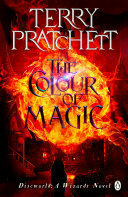
Finished reading: The Colour Of Magic by Terry Pratchett 📚
According to a legend, somewhere on the far side of the Disc, beyond the great sea, lies the Counterweight Continent. Since it’s assumed to balance the Disc’s other landmasses, yet appears relatively small, it’s believed to consist largely of heavy gold. Few sane people, of course, believe this story — until one day, a ship sailing up the smelly Morpork river brings a Tourist to the shores of Ankh-Morpork.
The locals don’t understand what a “tourist” is, but quickly deduce it means roughly the same as “idiot”. The man dresses oddly, acts strangely, and carries an absurd amount of gold — whose value he doesn’t seem to grasp. He’s also accompanied by a sentient pearwood chest, the Luggage, which is generally docile but turns into an unstoppable, murderous beast if its master is threatened.
Rincewind, a wizard who failed utterly at wizardry and is mostly a coward — though otherwise fairly clever — finds that he can speak the tourist’s language. The tourist, Twoflower, hires Rincewind as his guide. Soon, Ankh-Morpork is entirely ablaze, and Rincewind and Twoflower are fleeing by land, sea, and air.
The Colour of Magic launched the now-famous Discworld series in 1983, and over thirty novels have followed. Quite the achievement, especially considering this book alone is so packed with ideas and events that it feels like Pratchett wanted to include every concept he had.
I originally borrowed the book for my second grader, but after he found it too confusing after the first couple dozen pages, I ended up reading it myself. I’ve probably read it long ago, but Pratchett’s absurd British humor still hits the mark for me — and presumably for other fans of Monty Python and Douglas Adams as well.
Currently reading: The Praised, The Loved, The Deplored, The Forgotten: A View into the Wide History of Finnish Games by Kultima, Annakaisa; Peltokangas, Jouni 📚
Finnish games introduced briefly, but also contains a handful of interesting interviews. 🎮
If you think about what your average citizen of today should know about the demoscene, the least would be the fact that such a long line of digital culture exists. Even if it’s quite hidden from the mainstream, it has given rise to a huge amount of talent. Another is the existence of such media art and a community, of which not much is known, but which has been very active and played a significant part for those involved. Rather than thinking of whatever useful business skills were acquired, I would like the latter point to be the takeaway from all this.
–lecturer Markku Reunanen 💬